New Kitten Feeding Guide: Best Food, Schedule & Transitions

Feeding Your New Kitten Right: What to Start With for Healthy Growth and Calm Mealtimes
A new kitten needs more than “good cat food” to thrive—growth-focused nutrients, the right texture for their age, steady meal routines, and safe transitions that protect a sensitive stomach. The goal early on is simple: steady, healthy growth with predictable mealtimes that don’t turn into stress (or mess).
What makes kitten nutrition different from adult cat nutrition
Kittens are building muscle, bone, organs, and brain tissue at a rapid pace, so their diet needs to be more calorie-dense and typically higher in protein and fat than adult cat food. Feeding an adult-maintenance formula can leave a kitten short on the building blocks they need during this short, high-growth window.
Look for these development-critical nutrients and features on labels:
- Taurine for heart and vision support (cats must get it from food).
- DHA to support brain and eye development, especially in early months.
- Balanced calcium and phosphorus for bones and teeth (more is not always better—balance matters).
- Adequate water intake to support digestion and urinary health, particularly for kittens that don’t drink much.
Choose foods labeled “complete and balanced” for growth (or “all life stages”) from reputable manufacturers. When possible, prioritize brands that follow established nutritional standards and feeding trials; the WSAVA Global Nutrition Guidelines offer helpful criteria for evaluating pet food makers.
Homemade diets can be done safely, but only when formulated by a veterinary nutritionist. During growth, small nutrient gaps can have outsized effects, so avoid “recipe” diets that aren’t professionally balanced.
What food to start a new kitten on (by age and situation)
The first rule of kitten feeding is: start with what’s already working. If your kitten came from a breeder, rescue, or foster home, begin with the same brand and formula they were eating. Even a healthy kitten can develop diarrhea or vomiting from an abrupt change—especially during the stress of a new home.
Under ~8 weeks
Confirm age and next steps with a veterinarian. Many kittens under eight weeks still need a careful weaning plan, and some may require kitten milk replacer (not cow’s milk, which often causes GI upset). If you’re not sure how old the kitten is, don’t guess—get guidance quickly.
8–12 weeks
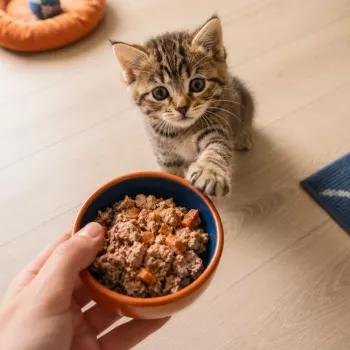
Most kittens do well starting with kitten-formulated wet food (pâté or finely minced is often easiest). You can also offer a small amount of kitten dry food if you prefer a mixed routine. Wet food tends to support hydration and can be simpler for tiny mouths.
3–6 months
Keep the kitten on a growth diet. Appetite often surges in this period, so structure matters: predictable meals help prevent frantic eating, food anxiety, and household “food drama.” If your kitten acts ravenous, it may be normal growth—or it may signal parasites or a diet that’s not energy-dense enough, so loop in your vet if behavior seems extreme.
6–12 months
Most kittens continue on kitten food until around 12 months. If your kitten is spayed/neutered during this window, appetite and metabolism can change, so reassess portions and body condition. Transition to adult food near 12 months unless your veterinarian recommends a different timeline.
Wet vs dry vs mixed feeding: choosing a routine that works
There’s no single “best” format—what matters is that the diet is complete for growth, your kitten eats it consistently, and total portions fit their body needs.
How much and how often to feed: a practical schedule
| Kitten age | Meals per day | Primary focus | Notes |
|---|---|---|---|
| 8–12 weeks | 4 | Easy-to-eat kitten food + hydration | Keep meals small; monitor stool and appetite closely |
| 3–6 months | 3 | Steady growth and routine | Introduce puzzle feeders slowly; avoid frequent brand switching |
| 6–12 months | 2 | Maintain lean body condition | Reassess portions after spay/neuter; plan adult-food transition near 12 months |
Transitioning foods without tummy trouble
If vomiting or diarrhea shows up, pause and return to the last tolerated ratio for a couple of days. If symptoms persist, if your kitten becomes lethargic, or if you see dehydration, contact a veterinarian. For additional owner guidance, the American Association of Feline Practitioners (AAFP) provides practical cat care resources.
Common feeding mistakes to avoid in the first month
A simple plan for happy mealtimes (and less mess)
Helpful digital guides from our shop
- Feeding Your New Kitten Right | Essential Kitten Nutrition eBook | Learn What Food to Start a New Kitten On for Healthy Growth & Happy Mealtimes
- Talk & Connect: Parent-Child Communication Workbook – Positive Parenting Guide for Stronger Family Bonds, Conversation Starters, and Emotional Connection (useful for setting gentle “kitten rules” with kids so mealtimes stay calm)
FAQ
Should a new kitten start on wet food or dry food?
Kitten-formulated wet, dry, or mixed feeding can all work as long as the food is “complete and balanced” for growth. Wet food often helps hydration and can be easier for young kittens, while dry can be convenient—just measure portions so total daily calories stay on track.
How many times a day should a kitten eat?
A practical starting schedule is 4 meals per day at 8–12 weeks, 3 meals per day at 3–6 months, and 2 meals per day at 6–12 months. Adjust based on steady growth, body condition, and your veterinarian’s guidance.
How do you switch kitten food without diarrhea?
Transition gradually over 7–10 days by mixing increasing amounts of the new food into the old. If stool quality worsens, step back to the last tolerated ratio for a few days; contact a veterinarian if diarrhea persists, vomiting occurs repeatedly, or your kitten seems unwell.










Leave a comment